A shift is underway in supervision
For decades, HR and OD advisors have learned to see organizations as systems — dynamic, interconnected, always in motion. That thinking is now crossing a threshold.
What if the individual is not the endpoint of systems thinking and change in organizations, but the beginning? What if we have been jumping too quickly to conclusions about how those broader systems actually work — without first understanding the very first system we inhabit: ourselves?
The individual is not an isolated self.
It is a living biological system — adaptive, responsive, shaped by signals from within and from the world around it.
The first system any of us ever lived in and will most consistently work with: our feelings, our emotions, our neurobiology, our way of making sense of the world.
This is not about enriching supervision with yet another framework or tools for analysis.
Seeing the individual as a living biological system reaches the roots of all the human disciplines we have built — it does not sit alongside them. It is a fundamental reorientation.
When we truly see people as living systems and apply systems thinking at the biological level, everything we bring to the work shifts.
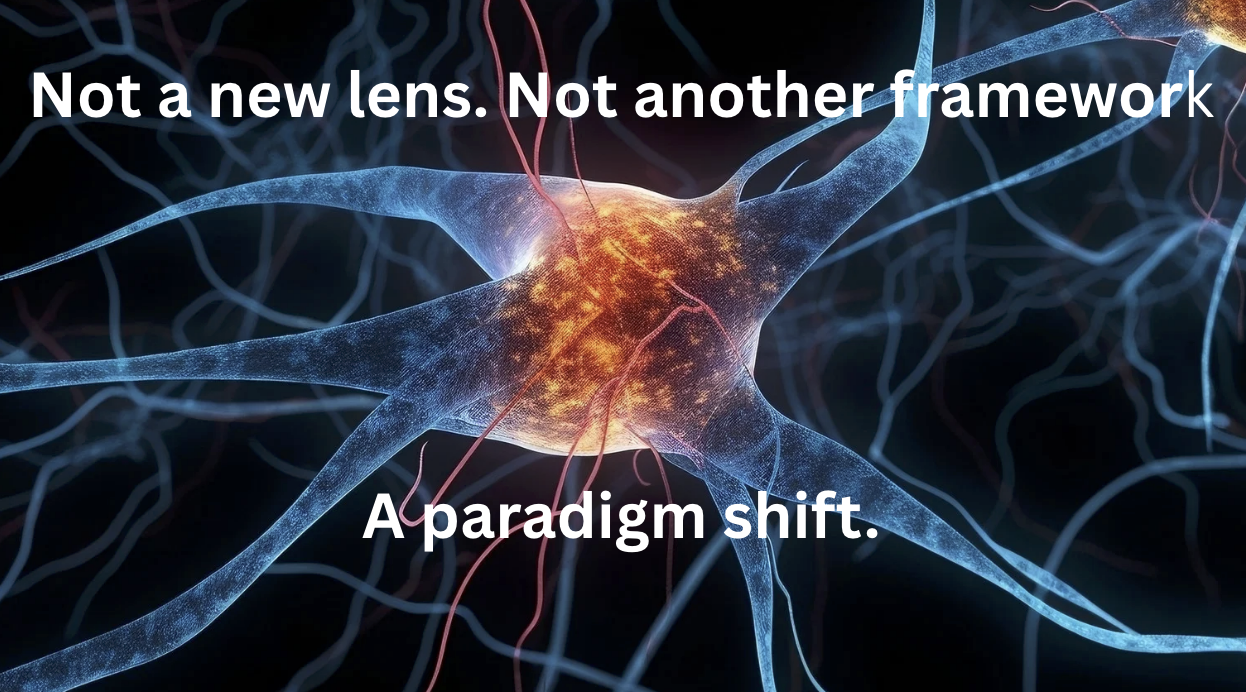
The questions supervisors and coaches bring to the edge will change with it. When we integrate what our biology tells us about being human — what does that do to supervision itself? This is not a new lens added to an existing practice. Not just another perspective. It is a paradigm shift. A return to the body as our first source of understanding. A return to thinking as a whole body process, not just brain based. And we are standing at its beginning.
In the npnHub | Uniting Experts and Learners in Applied Neuroscienceand through NPARS supervision we are beginning to explore exactly this.
What changes when you stop seeing the person across from you in an organizational role or as a psychological being —and start seeing them first as a biological one?