Message in a Bottle 🌊
“What if even the smallest gesture of hope could create a ripple effect around the world — one message and one connection at a time?”
Do you remember Message in a Bottle by The Police? Sting wrote this song in the late seventies in a small London flat before the band became famous. It tells the story of a castaway who sends a cry for help across the ocean — a metaphor for human loneliness.
A year later, the castaway finds “a hundred billion bottles” on the shore and realizes loneliness is universal. The ebb and flow of the guitar mirrors the ebb and flow of hope and despair — suggesting that, like ocean currents, connection will eventually find us.
🎶 Here’s the Link to the song if you like.
From Song to Workshop
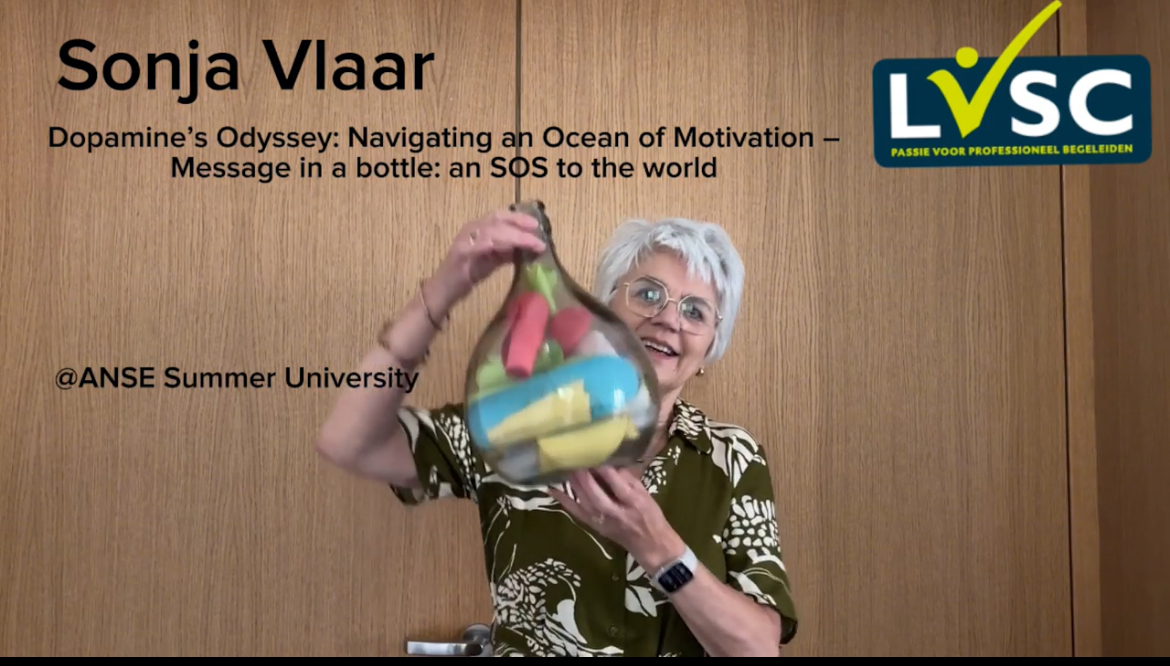
This image of reaching out across isolation inspired my workshop at the ANSE Conference.
The conference’s overarching theme was “An Ocean of Possibilities” and my workshop was titled “Dopamine’s Odyssey: A Message in a Bottle.”
In the workshop we explored the function of dopamine, the difference between wanting and liking, and how we can regulate the level of dopamine in our biology.
I will not go into detail about the content of this workshop in this post, but I will talk about the messages in the bottle.
During the workshop, I placed a bottle in the middle of the room and asked participants to write messages for themselves and for anyone else who might one day “find the bottle.”
The notes carried hope, reflections, questions, and insights.
Back home, I carefully transcribed the messages of hope exactly as they were written.
Most of the notes had no name or address of the sender, which left me feeling for a brief moment like Sting’s castaway: reaching out into the unknown, unsure if anyone would ever receive the message. This was a powerful reminder of both the vulnerability and hope that comes with sharing our thoughts.
Today, I am bringing them to my post on LinkedIn — a modern “message in a bottle” — trusting that these words may further spread and touch someone who needs them.
Messages of Hope
Here is a selection:
- May the war in Ukraine stop / I wish the war in Ukraine is finished
- I hope that evolution comes without destroying what we have created on this Earth
- I hope for the flexibility to find balance |
- Do more what you choose to….. not what you must
- May we as a human race attain deep and lasting peace together
- The world needs more dialogue
- Give a regular “thank you” to your team members as reward for their effort
- I wish to do more what I want in the long term
- Supporters should not be afraid of support, understanding gives rise to choose
- Feel whole, be enough and feel loved; You are unique and enough
- I hope more people will learn about dopamine
- I wish peace and good development for my family
- I live in Ukraine, I want the war to end
- Get higher willpower
- I want to be a successful leader and supervisor / coach at the same time
- Be honest to yourself
- Stop and breathe from time to time
- That the world will connect more again and overcomes wars and conflicts
- May belonging and connectedness fill the space where the craving for dopamine goes
- Let my children be safe.
As a symbolic gesture, I returned all the notes to the bottle and let it “sail,” trusting that our shared learning and hopes would ride the waves and reach those who need,
Two weeks later, a participant wrote to me: “Your workshop on dopamine was inspiring and thought-provoking. The idea of a bottle message was great, too!”
Her feedback was a ripple back to me — proof that the messages are travelling.
Systemic Echoes
Prof. Dr. Philipp Staab’s keynote at the ANSE Conference that morning titled “The Rise of the Adaptive Society”, resonated deeply with the messages in the bottle.
He argued that our societies are no longer held together by progress, but by the struggle for self-preservation in the face of war, climate change, and economic hardship.
Such systemic challenges cannot be solved alone. As a study by his students with therapists revealed: “You cannot treat systemic world anxieties, like climate anxiety, on an individual basis. These are not imagined problems. They can only be addressed collectively”.
This reminded me of the ripple effect in relationships: just as the messages in our bottles reach beyond the sender, our connections in groups and organizations carry hope, resilience, and shared strength. Together, we can face what feels too big to bear alone.
Neuroscience Perspective
From a neuroscientific perspective, it is clear that anxiety is not purely psychological. It is the result of the dynamic interplay between neural, physiological, and social processes. It is both a state of imbalance and a driver of adaptation.
Dopamine can fuel motivation and neuroplasticity, particularly when effort leads to reward.
When we share our feelings and efforts with others and in groups, with empathy and resilience, we can transform despair and isolation into collective strength.
Closing the Circle
Conferences like ANSE provide the “circles of trust” in which these connection can develop and ripple.
In this way, the bottle continues its journey.
The circle closes.
The message finds its shore.
If you could put one message of hope into a bottle today, what would it say — and who would you hope to find it?